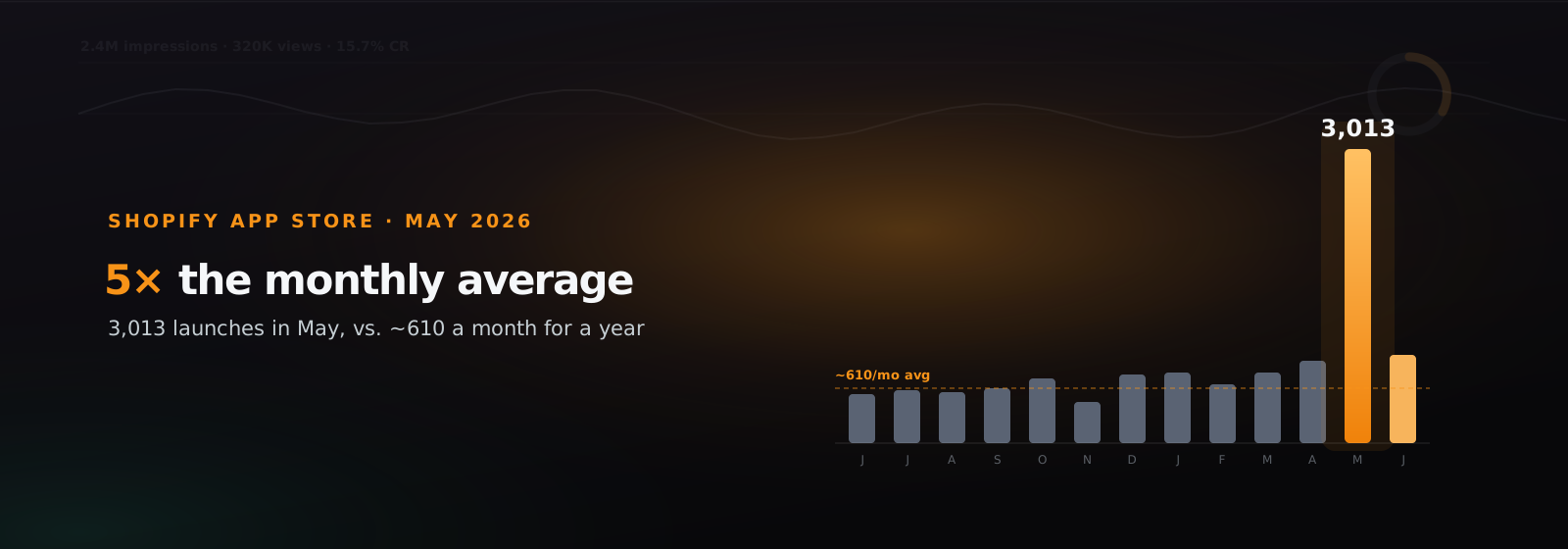
For eleven months, the Shopify App Store added about 610 new apps a month. In May, it added 3,013.
From June 2025 through April 2026, monthly launches sat in a narrow band, between roughly 430 and 800. Then May broke the pattern. Just over three thousand apps carry a May 2026 launch date, close to five times the monthly average and almost four times the busiest month before it.
Put another way: the store went from adding about 20 apps a day to nearly 100.
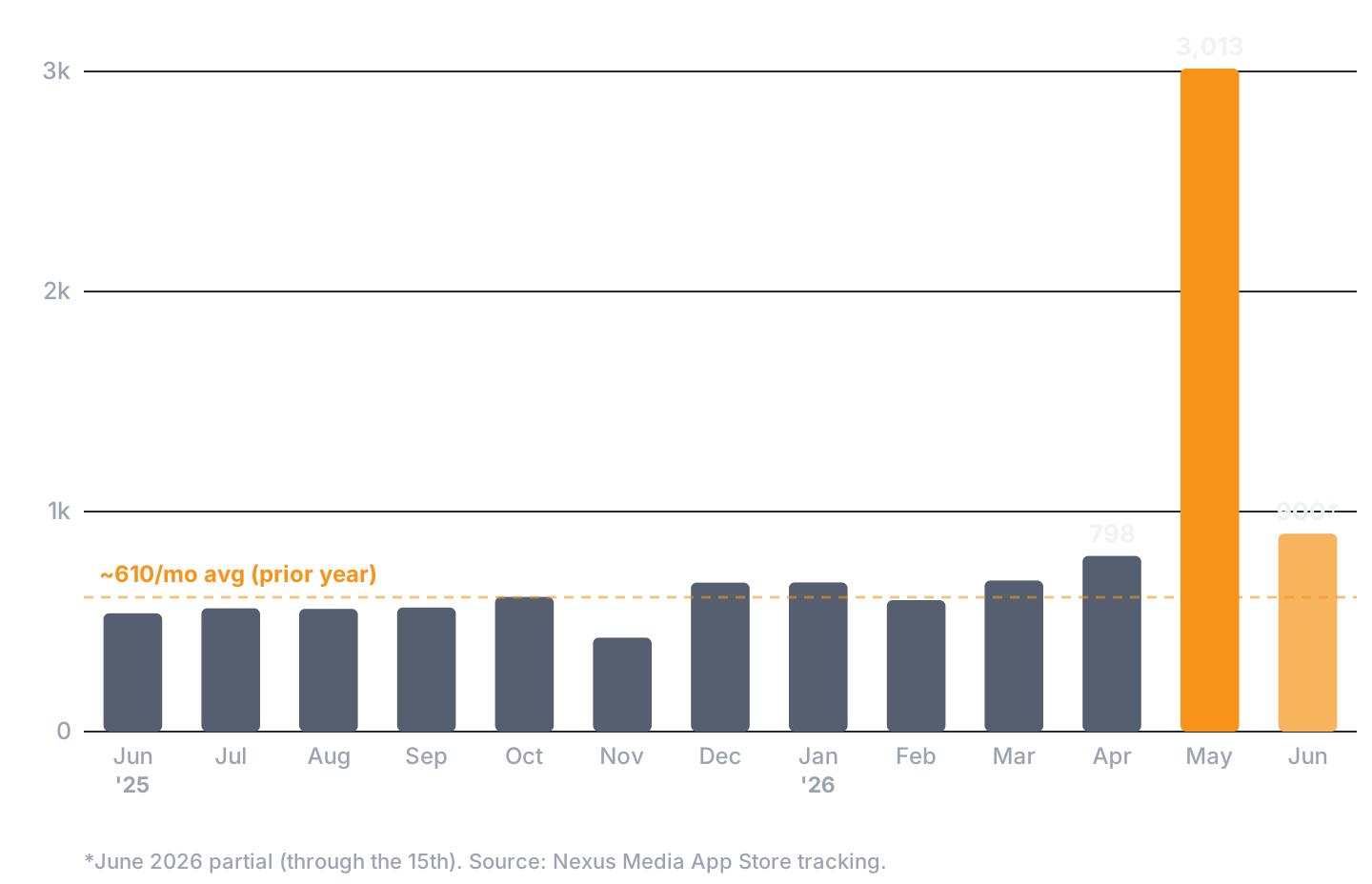
New apps by month, by Shopify launch date. The May bar is real — we confirmed it three separate ways.
We checked whether it’s a glitch. Three times.
A jump this size usually means a measurement problem. A backlog that flushed. A crawler that suddenly found apps it had been missing. So we tested it.
First, Shopify stamps each app with its own launch date. Of the apps that show up in our data for the first time in May, more than nine in ten carry a Shopify launch date in May itself. They’re new by Shopify’s own record, not old apps we noticed late.
Second, we counted launches a different way, by when each app first appeared in our daily crawl, ignoring the launch-date field entirely. That method lands on about 3,050 for May. The two counts agree within a couple of percent.
Third, we didn’t trust our own pipeline. We wrote a separate script that visited each developer’s App Store page for April, May, and June and re-read the published date straight from the live listing. Every month came back confirmed. So this isn’t a parsing bug on our end. The apps are really there, and they’re really new.
It wasn’t a single dump
The next suspect was a one-time bulk import, some batch of apps that all went live on the same day and inflated the month. It wasn’t that either.
New apps arrived steadily on weekdays, between about 100 and 250 a day, and all but vanished on weekends: roughly 140 a weekday against fewer than 10 on Saturdays and Sundays. That’s the normal rhythm of Shopify’s review-and-publish pipeline, which runs on business days. A backlog flush would show up as one or two enormous days. This is the opposite, a steady weekday cadence that held for the entire month.
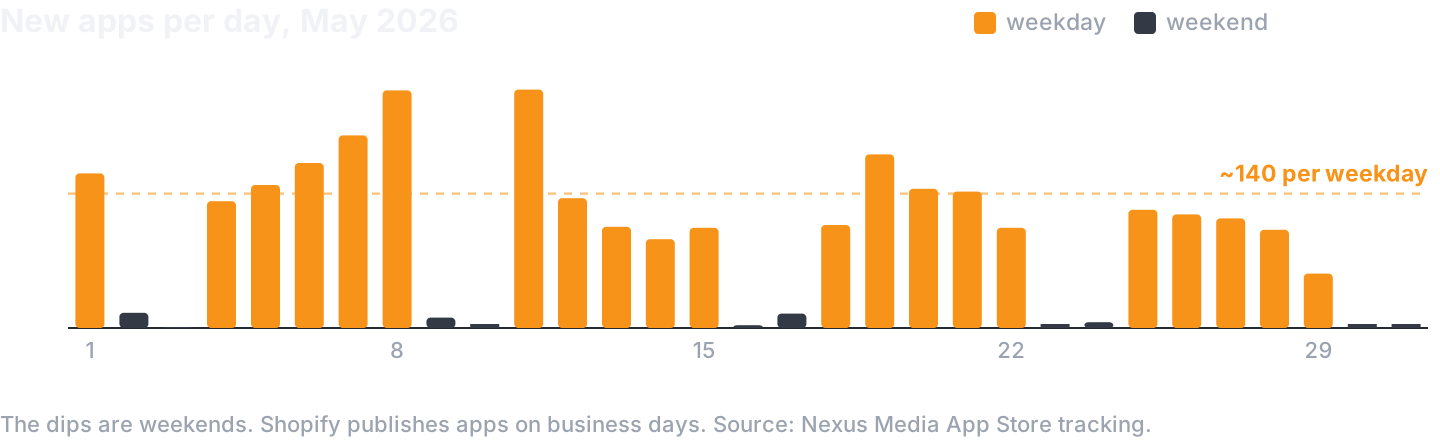
Launches tracked Shopify’s weekday publishing rhythm all month: about 140 a weekday, single digits on weekends. A one-time dump would look nothing like this.
Who’s behind it: a wave of first-time developers
This is the part that tells you what’s actually happening. The 3,013 apps came from 2,521 different developers, about 1.2 apps each. So this isn’t a handful of actors mass-listing hundreds of apps. It’s a crowd.
And it’s a crowd of newcomers. Of those 2,521 developers, 1,912 had never published a Shopify app before. First-timers account for 2,140 of the month’s apps, just over 70%. Nearly nine in ten developers in the cohort shipped exactly one app and stopped.
There’s a striking exception at the other end. One developer, UnReact Inc., shipped 24 separate apps in a single month, close to one a day. A few others ran in the same lane: 16 from one studio, 14 from another, then a tail of shops with six to eight apiece. Two dozen apps in thirty days from one account is its own kind of signal. Whatever those teams are doing, they aren’t hand-coding each app from scratch.
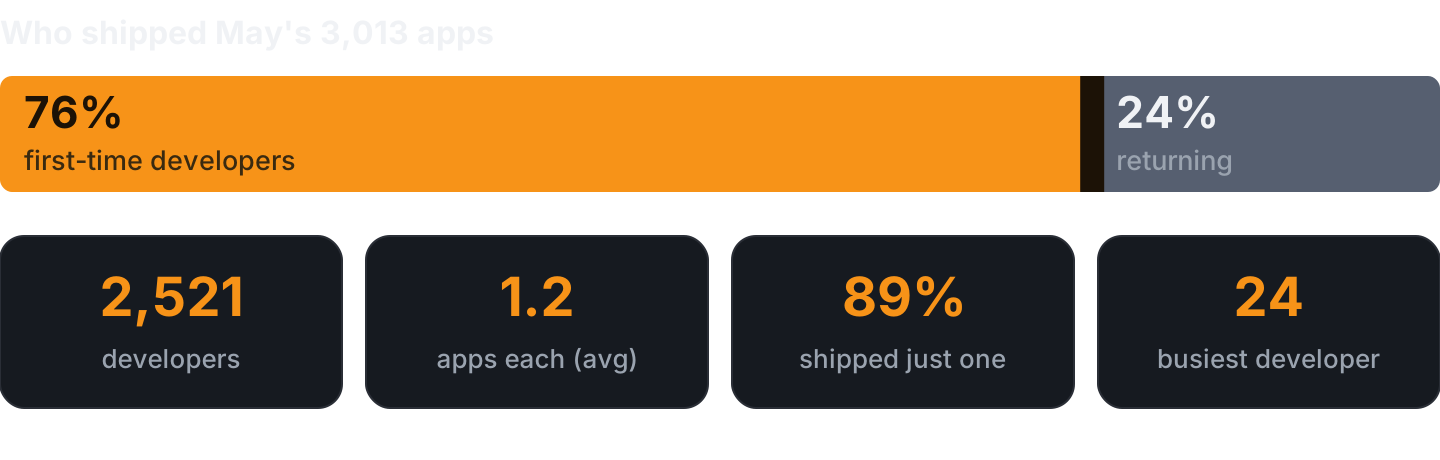
2,521 developers, most of them new, most shipping a single app — with a short tail of studios pushing out apps in bulk.
What the new apps look like
Here’s where it gets interesting, because the obvious story, a flood of low-effort junk, only half holds up.
The apps are young and unproven. 86.8% have zero reviews, against 74% for February’s cohort. Almost none have been delisted yet, but they’ve only had a few weeks. The new-developer, one-app, no-reviews pattern is exactly what you’d expect if a chunk of these are thin or AI-generated listings.
But two things you’d expect from a junk wave aren’t there. The category mix barely moved: May’s apps spread across Store design, Store management, Marketing, and Orders and shipping in almost the same proportions as the months before it. And the pricing looks normal: only 3.7% are free-only, the same share as January through April. Most carry real paid tiers.
By price, category, and geography, May’s apps look like any other month. What’s different is who shipped them, and how new they are.
So the honest read is somewhere in the middle. This isn’t 3,000 identical spam clones. It’s a broad wave of small, first-time developers building ordinary-looking apps across every category, many of which haven’t earned a single review and may never. Whether each one is hand-built or AI-assisted, we can’t tell from a listing. The pattern across the whole cohort is what points at AI.
Where the apps came from
We thought the surge might be concentrated somewhere, one country’s developers flooding in at once. It wasn’t.
We read the developer address off each April, May, and June listing, the same way we re-checked the launch dates, and resolved a country for about 88% of the apps. May’s map looks almost exactly like April’s. The United States and India lead both months, the way they always have. The top five countries make up about 56% of launches in April and again in May. Every major source scaled up together.
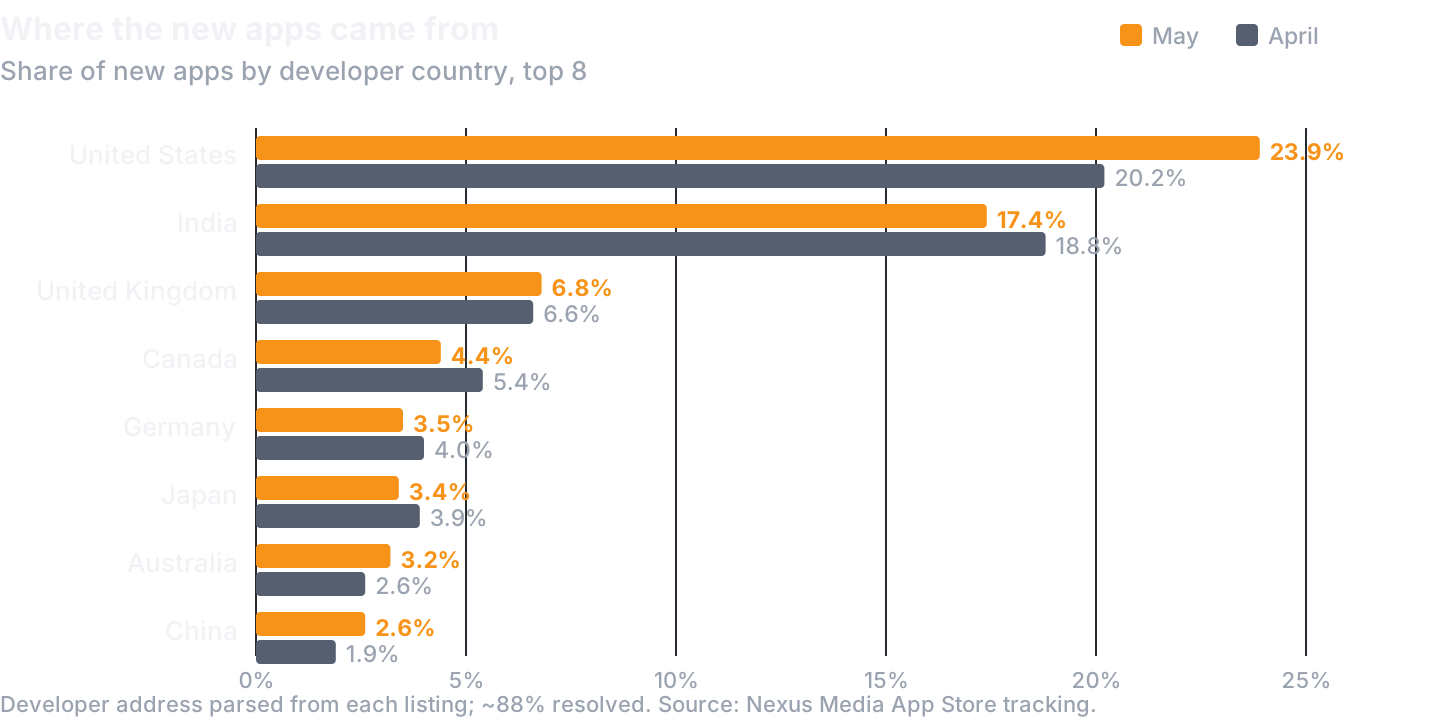
May’s country mix (green) sits almost on top of April’s (grey). The surge scaled the existing geography rather than changing it.
The one real shift is the United States: 146 launches in April, 635 in May, with its share rising from 20% to 24%. India, the UK, Canada, Germany, and Japan all grew at close to the overall rate. A wave that lands everywhere at once, in the same proportions, looks like a tool everyone reached for, not a regional event.
Our read: AI made app-building cheap, but the timing is a puzzle
We can’t see a motive in the data, so this part is interpretation. The pattern points one way; the timing points nowhere clean.
The pattern fits the AI-coding story almost too well. General-purpose AI coding assistants — Cursor, GitHub Copilot, Claude Code and the like — crossed a line over the past year where someone who isn’t an engineer can describe an app and get working, submittable code back. A wave of first-time builders shipping one app each, spread evenly across every category, is what “the barrier just dropped” looks like from the outside. The studios at the top, two dozen apps in a month, look like the same tools pointed at volume.
What we can’t explain is May. These tools improved gradually through late 2025 and early 2026, yet launches held flat near 600 a month until April, then roughly quintupled. We don’t have a single event to point at, no Shopify announcement or product release that maps cleanly onto May 1. It could be adoption crossing a threshold, a popular template or tutorial making the rounds, or something that doesn’t show up in listing data at all. We’d rather say we don’t know than invent a reason.
One thing we can rule out: a one-time review-queue flush. That would spike for a day or a week, then fall back. Instead, the surge kept a steady weekday rhythm across all of May and rolled into June. That’s a change in how many apps are being built and submitted, not a backlog clearing.
3,013 — apps launched in May 2026
76% — from first-time developers
86.8% — have zero reviews (vs 74% in Feb)
What four times the competition changes for you
If you build on Shopify, the takeaway isn’t panic. It’s that the math of getting discovered just shifted under you.
Finding an audience gets harder. More apps compete for the same keywords and the same category browse pages, and the new arrivals are spread across every category, not walled off in one. A listing that ranked comfortably in March is up against a deeper field now.
The flip side: most of the new field has zero reviews and no track record. Review velocity, a real support presence, and a listing that’s obviously maintained separate you from a thousand one-app newcomers faster than they did six months ago. The bar to look credible went up, which means clearing it counts for more.
Keywords are where you’ll feel it first. If you haven’t looked at your ranks since spring, look now. The set of apps you’re measured against has changed.
Is it still happening?
Through the first half of June, about 900 more apps carry a June launch date. That’s below May’s peak but still roughly triple the old normal, and the daily pace hasn’t fallen back to where it was. For now this reads as a new, higher baseline rather than a one-month blip. We’ll keep watching whether June’s apps start earning reviews or quietly disappear.
One caveat on the headcount
If you follow another App Store tracker, our numbers will look high. AppJubilee’s 2026 report, updated in late May, lists 17,891 active apps and about 387 new in the prior 30 days (AppJubilee). We see more than 23,000 live apps and 3,013 launches in May. It didn’t register the surge at all.
That gap is about what each of us counts, not who’s right. Curated trackers follow apps that rank for a set of tracked keywords, and they exclude apps in review or with too little data. Most of May’s new apps don’t rank for anything yet, no reviews and no traction, so they’re invisible to that method by design. Our crawl captures every public listing the day it appears, which is why we caught a wave built almost entirely out of low-visibility newcomers. Different universe, different number. Don’t expect ours to match a curated headline.
How we measured this
Data. Our own daily crawl of the public Shopify App Store, running since April 2023. The store currently lists more than 23,000 live apps.
“Launched in month X.” The app’s published Shopify launch date falls in that month. We cross-check this against the first date the app appeared in our crawl.
The three-way verification. Two independent counts for May — by Shopify launch date (3,013) and by first appearance in our data (~3,050) — agree within 2%. Of the apps first seen in May, 93% carry a May launch date. A separate script then re-read the live developer pages for April, May, and June and confirmed each published date directly.
First-time developer. A developer with no earlier app in our data. Measured by the earliest launch date across all of a developer’s apps. A small number of long-gone developers may be missed, which would understate, not inflate, the first-timer share.
Cohort profile. Reviews, pricing, and category are read from each app’s current listing. “Free-only” means the listing offers no paid tier. Category is the app’s top-level Shopify category.
Developer country. For this piece, we re-read the developer address shown on each April through June listing and mapped it to a country, double-checking against the listing’s address field. About 88% are resolved; the rest have no public address and are excluded from the country shares. This was a one-time pass, not yet part of the daily crawl.
Limits. June 2026 is partial through the 15th, and recent launches may still be syncing, so the June figure is a floor. Why May specifically is unexplained, and the cause is our interpretation, not something the data states.
Questions we get asked
How many apps are on the Shopify App Store right now?
More than 23,000 live apps, as of mid-June 2026.
How many new apps launch in a normal month?
About 610, across the year before May 2026, ranging from roughly 430 to 800.
Is this just spam or AI junk?
Partly, maybe. The apps skew new-developer, one-app, zero-review. But their categories and pricing look like any other month, so it isn’t a wall of identical clones. It reads as a broad wave of small, first-time builders.
Where are these developers based?
All over. The country mix in May matched April almost exactly, with the US and India leading both months. The surge was global, not concentrated in one region.
What caused it?
Most likely cheaper AI coding tools let non-developers ship a working app — the cohort fits that. But we can’t explain why it started in May specifically, and we won’t pretend to.
Why is your count so much higher than other trackers?
We capture every public listing as it appears. Keyword-based trackers only count apps that rank or have traction, so they miss a wave of brand-new, low-visibility apps.
Cite this
For the year before May 2026, the Shopify App Store averaged about 610 new app launches a month. In May 2026 it recorded 3,013 — close to 5× the average — from 2,521 developers, 76% of whom had never published a Shopify app before. 86.8% of the new apps have zero reviews. Source: Nexus Media Shopify App Store tracking, daily since April 2023, as of June 16, 2026.
Sources
Figures from Nexus Media’s daily tracking of the public Shopify App Store. Numbers refreshed June 16, 2026; June is a partial month.